
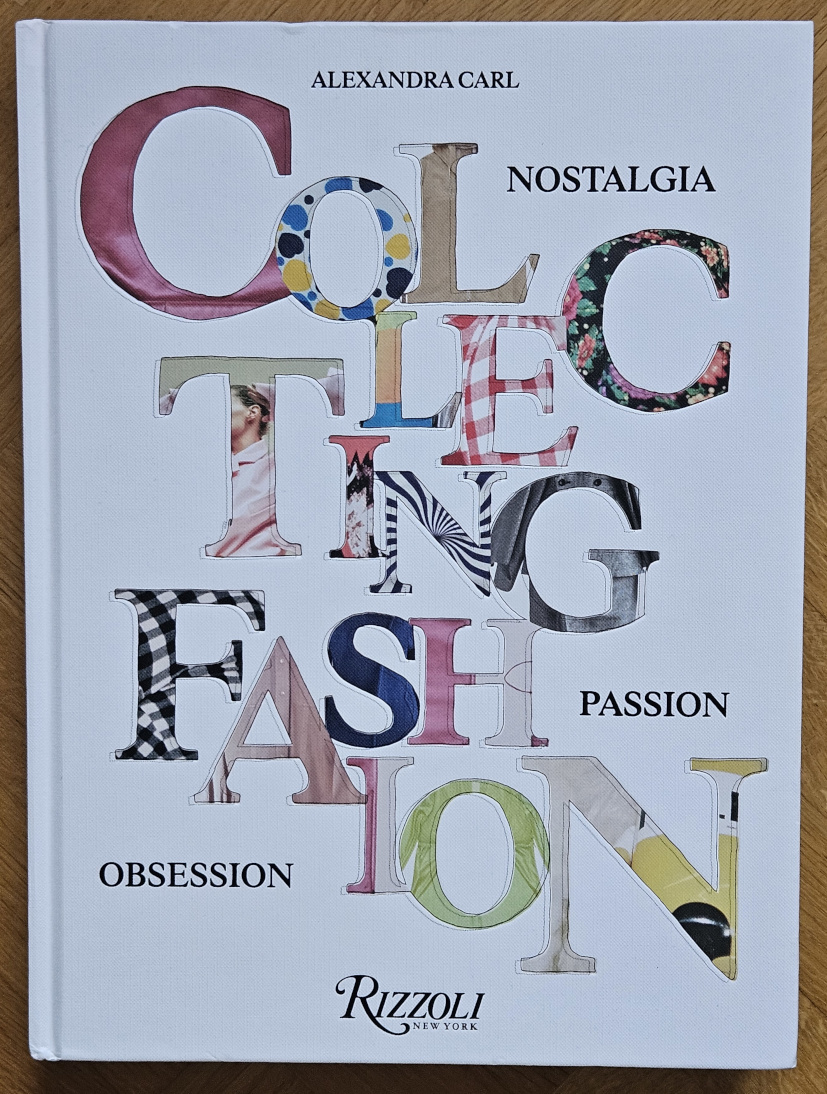
Alexandra Carl’s book is a rare sign of independence in today’s fashion world. It is not superficial and fast-paced, but a book that takes its time.
It took Alexandra Carl, according to interviews available when you google her name, almost 3,5 years to finish it. The result is not one of those typical home-stories of famous people with nice interiors or a beautiful clothes collection. The people featured are true collectors of a very specialized kind of fashion or accessories.
It also takes time to flip through the book “Collection Fashion” and appreciate the beauty in some of the shown garments, as it is not obvious to everyone directly. Beauty is often not a fairy tale princess look, but the knowledge about the construction of a piece, the time that was needed to create and produce it and the rarity of the items. Beauty is always in the eye of the beholder.
Categories, according to which collections in the book were assembled, vary from items of a designer like Helmut Lang, Thierry Mugler, Martin Margiela, Yves Saint Laurent, John Galliano & Alexander McQueen, and Azzedine Alaia to broader spaces. “Collecting the Exaggerated” (Alexander Fury) and “Collecting Lifetime Mementos” (Michel Gaubert) are just 2 of them. All in all, 20 collectors and their collections are presented.
Most of the collectors I have never heard of, them not being household names, apart from e.g. Azzedine Alaia, Hamish Bowles and Carla Sozzani. Probably people like Michele Lamy, Jefferson Ihenacho, Adrian Appiolaza, and many more are well known in informed fashion circles and famed for their expertise. They are not daily in the broader public’s eye, though. It seems they are quite happy not to be, and they collect in privacy. That a lot of them opened their wardrobe vaults to Alexandra Carl and her team shows deep appreciation and trust for her.
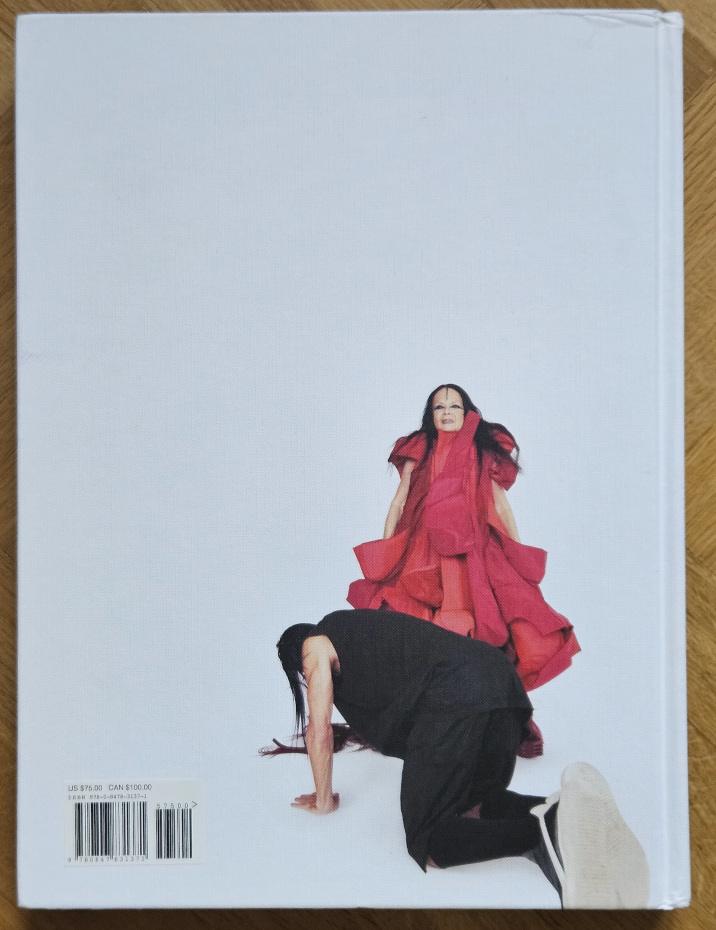
Some of the collectors, being men, collect women’s fashion, and are therefore never or at least not often are able to wear it. Other garments look out of form and are difficult to wear, like the back cover of Alexandra Carl’s book shows. Michele Lamy collects the fashion brand Comme des Garcons – and not the easy to wear pieces. Still, one of her dresses she is depicted happily wearing. Michele Lamy uses pieces of her collection for official functions and for running errands, as the accompanying text tells us. That some of the pieces do not have armholes and are extremely voluminous does not deter her. A collector sees more in an item that he / she deems worth collecting than an unsuspecting bystander. The people featured in “Collecting Fashion” see their treasures as pieces of art, worth being shown in museums. Still some of them, like Michele Lamy, want their clothes to see daylight, to live with them, to express feelings and emotions.
An interesting introduction by London based consumer psychologist Dr. Dimitros Tsivrikos opens the book. His distinction between collectors and hoarders is not fully plausible to me, but it does show the right direction. Both groups do acquire a large number of objects and become emotionally attached to them, and both groups do not really want to part with their collections. According to him, the hoarders also collect clutter and their collections might drop in value over time. Whilst collectors are organized, compulsive hoarders are disorganized and feel distress.
It is certainly also a matter of the ability to know how far one’s money goes. Most of the collectors in Alexandra Carl’s book are not super-rich, but they started to collect early on and continued according to their means all through their life. A hoarder spends more money than he / she has, a collector knows when to stop. That would be my distinction, but I am not a psychologist.
As early as July 2013 the term “acquisitive buyer” was introduced by a group of scientists around Musoumi Bose, Alvin Burns and Judith Anne Garretson Folse. A quote from their study reads as follows:
“Materialism, positive perfectionism and variety-seeking in a particular product category are some of the characteristics of these buyers.”
Most collectors are very well characterized by this description, and the term “acquisitive buyer” is also used by Dr. Dimitros Tsivrikos.
Alexandra Carl herself is a Danish born, London based stylist and journalist very much at home in a world of artists and fashion. Her first book hopefully will not be her last. The topic, the underlying emotions of nostalgia, passion and obsession show an ability to uncover important topics easily overseen by mainstream authors and journalists.
Collections are art in the eyes of their creators, not necessarily in those of anyone else seeing them (apart from those collections that have immense monetary value as well). Collectors have a lot of fun with their possessions and use them to express their personality. Being a collector means that a person finds peace in him / herself and does not need to get appreciation all the time from the outside. In general, one might say that collectors are peaceful people who love to be left alone when playing with their treasures. But they also come happily back to the real world and interact with friends, family and co-workers. If they allow you a glimpse on their collection, look at it with friendly eyes.
All rights to the book belong to:
Carl, Alexandra: Collecting Fashion, Nostalgia, Passion, Obsession, 2024, first published in the United States of America by Rizzoli International Publications, Inc., 300 Park Avenue South, New York, NY 10010, printed in China, ISBN: 9780847831371